Immersive Home Entertainment
Turn your clients’ homes into entertainment destinations
Creating a successful entertainment space starts with understanding how homeowners want to use it, then designing the technology around those needs. The most successful projects go beyond selecting the right products to consider how the entire environment works together.
Today's homeowners want entertainment spaces that feel intuitive and fit naturally into their lifestyles. They may use a room for movie nights, gaming, watching sports, listening to music, entertaining guests, or simply relaxing with family. In many cases, the same room needs to support several of these activities.
That means integrators need to look beyond individual products and consider how multiple systems can work together. Audio, video, lighting, networking, control, seating, acoustics, and environmental features can all contribute to the experience.
The goal is to create a space where technology works seamlessly in the background, allowing homeowners to focus on what they're doing rather than how they're doing it.
Before recommending technology, integrators should aim to fully understand how the homeowner intends to use the space. Questions about primary activities can help establish the foundation for the design. Will the room primarily be used for movies and television? Is gaming a priority? Will the homeowner stream concerts or listen to music? Will they regularly entertain guests and carry on conversations while the system is running?
Usage frequency, the number of people using the space, and who needs to operate the equipment are also important considerations.
The room itself also plays a major role in determining the right solution. Natural sunlight can affect the viewing experience, while room dimensions, traffic patterns, seating arrangements, and viewing angles can influence everything from TV placement to speaker positioning.
It's also important to understand the atmosphere the homeowner wants to create. A dedicated home theater may be designed to feel like a professional theater, while a family room might need to feel warm and comfortable for everyday use. Another space may need to transition easily into a party room when guests arrive.
Aesthetic preferences should be discussed early, too. Homeowners may want speakers hidden from view, have concerns about sound traveling throughout the house, or be open to incorporating acoustic panels into the room's design.
Understanding these preferences allows integrators to build the experience around the homeowner instead of forcing the homeowner to adapt to the technology.
Not every entertainment space has the same performance requirements.
Dedicated media rooms and theaters can be designed specifically around entertainment. Speaker placement, acoustics, seating, display positioning, and lighting can all be optimized for the best possible viewing and listening experience.
Multipurpose living spaces require a different approach. These rooms may need to accommodate television viewing, gaming, family activities, conversations, and entertainment. Integrators need to balance performance with aesthetics and everyday functionality.
“Dedicated media rooms or theaters are designed around performance, allowing for optimized speaker placement, acoustics, and seating to create the most immersive experience possible.”
- Alex Zaliauskas, Director of Product Management, Speakers at ADI Global Distribution
Audio and video establish the foundation of an immersive entertainment environment, but creating that experience involves more than choosing equipment based on specifications.
Speaker placement can have a significant impact on the listening experience. The location of speakers, seating positions, room acoustics, and the relationship between the listener and the display should all be considered together.
Video design requires the same approach. Screen size should be appropriate for the room and viewing distance, while seating and sightlines should help ensure everyone has a comfortable view.
Audio can also make the room itself seem to disappear, pulling homeowners deeper into what they're watching or listening to.
“Audio works in tandem with what you are watching to create a truly immersive experience, pulling you in and making the room itself seem to disappear. Lighting supports this by controlling visual distractions, making the experience feel more real and keeping your eyes on the screen.”
- Alex Zaliauskas, Director of Product Management, Speakers at ADI Global Distribution
Content sources and network reliability are another important part of the experience. Streaming, gaming, live television, and other sources depend on a reliable infrastructure. When content is easy to access and the system performs consistently, homeowners can focus on the entertainment rather than troubleshooting the technology.
For larger homes, distributed audio can extend the experience beyond a dedicated entertainment room. Music can move throughout the home, allowing homeowners to enjoy consistent audio as they move between spaces.
Lighting can dramatically change how an entertainment space feels. A movie may benefit from a darker environment with minimal visual distractions, while watching sports with friends may call for more ambient light. Gaming, music listening, and social gatherings can each require different lighting conditions.
Layered lighting gives homeowners the flexibility to adapt the environment to different activities. Ambient, accent, and task lighting can work together to provide both functionality and atmosphere.
Automated lighting scenes can make those changes even easier. A movie scene might dim the room and reduce distractions, while an entertaining scene could provide more ambient illumination for guests.
Lighting can also work with the display and the overall room design to keep attention focused where it belongs. The goal is to make lighting support the activity rather than become another system the homeowner has to manage.
Even a well-designed entertainment space can become frustrating if homeowners need several remotes, apps, and switches to operate it.
Unified control panels can simplify the experience by allowing multiple systems to work together. A single scene can coordinate the display, audio, lighting, and other connected technologies. Intuitive control also helps make the system accessible to everyone in the home.
A well-designed interface can help prevent common operational issues and reduce the likelihood that homeowners need to troubleshoot their system or call for assistance.
The same approach can help overcome limitations within the room. When AV, lighting, and other systems are designed to work together, automation can compensate for changing conditions and make the space easier to use.
Bringing multiple technologies together can add complexity to a project, which is why having the right products and support can be invaluable.
Comfort can have an enormous impact on how enjoyable an entertainment experience is. Temperature, acoustics, natural light, air quality, and seating all contribute to the environment.
Climate control can help maintain a comfortable temperature during extended movie nights, gaming sessions, or gatherings.
Acoustic treatments can improve sound quality by managing reflections and reducing distractions. They can also help address concerns about sound traveling into other areas of the home.
By considering these environmental elements during the design process, integrators can create spaces that feel comfortable and intentional rather than simply filling a room with technology.
Homeowners increasingly use multiple areas of the house for entertainment, from living rooms and kitchens to outdoor spaces. Distributed audio and video can allow homeowners to continue enjoying content as they move throughout the home.
Music can follow homeowners from one space to another, while consistent control interfaces can make different systems easier to operate. This also creates an opportunity for integrators to think about the home as a connected entertainment environment rather than a collection of individual rooms.
The design process starts with understanding lifestyle, room usage, entertainment habits, aesthetics, and comfort. From there, integrators can determine how AV, lighting, networking, control, and environmental systems should interact.
The approach will look different for every project. A dedicated theater may be designed primarily around creating a cinematic experience, while a multipurpose living space may need to accommodate a wider range of activities and use cases.
Music can follow homeowners from one space to another, while consistent control interfaces can make different systems easier to operate. This also creates an opportunity for integrators to think about the home as a connected entertainment environment rather than a collection of individual rooms.
“Multipurpose living spaces require a balance of performance, aesthetics, and everyday functionality, making thoughtful system design essential to deliver great sound without compromising how the room is used.”
- Alex Zaliauskas, Director of Product Management, Speakers at ADI Global Distribution
When these systems are designed as one cohesive experience, homeowners don't need to think about which technology is doing what. They can simply choose what they want to do and let the environment respond.
That's what makes an entertainment space feel truly immersive: The technology works together so naturally that it becomes part of the experience, rather than the focus of it.
For integrators, designing around lifestyle also creates an opportunity to deliver entertainment environments that can adapt as homeowners' needs change. By focusing on flexibility, comfort, simplicity, and how people actually use their homes, integrators can create spaces that deliver value well beyond the initial installation.

Explore ADI’s smart home solutions to discover products that can help you create more immersive, connected entertainment experiences for your customers.
Learn More
Watch the video to see how home technology can be seamlessly integrated into homeowners’ spaces, preserving the design and aesthetic of the home without compromising functionality.
Watch Now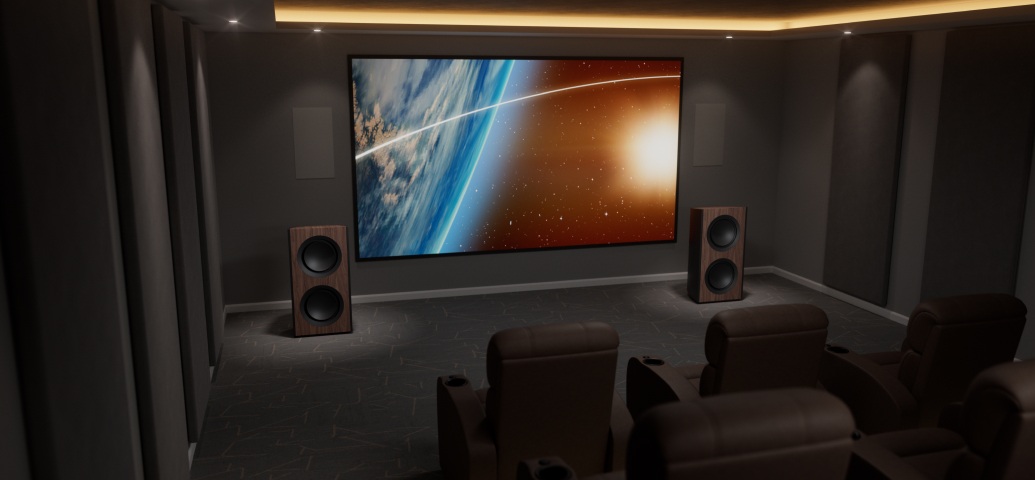
Discover the design principles that determine whether a home theater or media room delivers a truly immersive audio experience.
Watch Now