Why Non-Sacrificial Power Matters
Learn how your installs can benefit from leveraging different power solutions
Modern AV and security systems are more connected and more dependent on reliable power than ever before.
A residential entertainment system might include multiple displays, AV processors, amplifiers, streaming devices, control processors, network switches, wireless access points, and smart-home equipment.
A commercial security installation can add cameras, NVRs, access control hardware, PoE switches, servers, networking equipment, intercoms, and other connected devices to the mix.
All of those devices have something in common: power matters.
A single power disturbance can affect multiple interconnected devices at once. And because today's systems are designed to communicate with one another, a problem with one piece of equipment can quickly become a problem for the entire project or deployment.
For integrators, surge protection is about more than simply powering devices on. It is an essential part of good system design..
Traditional surge protectors typically rely on components that absorb or divert transient energy, leading to degradation over time. While a cost efficient solution, repeated exposure to surge events eventually reduce their protective capability leading to equipment failure or degraded performance and reliability.
Non-sacrificial surge protection takes a different approach. Instead of treating surge protection as a component that may eventually need to be replaced after repeated surge events, non-sacrificial technology is designed to maintain protection over the life of the installation.
For professional integrators, that distinction matters. The goal should not simply be for a system to survive one surge. The goal should be to design a system that is better prepared for the electrical environment it will encounter throughout its service life.
Many traditional surge protection devices use components such as metal oxide varistors (MOVs) to help divert transient voltage away from connected equipment. These devices can be effective and are widely used, but surge exposure can place stress on the protective components. Repeated events can contribute to degradation, potentially reducing the protection available over time.
That does not mean a conventional surge protector necessarily fails after a single surge. Rather, the important consideration for an integrator is that surge protection itself can have a service life depending on the technology and the electrical environment.
Non-sacrificial surge protection is designed to address that concern.
Instead of relying solely on a protective element that is progressively consumed by surge events, non-sacrificial protection is designed to continue providing protection after a surge event occurs.
That is the mindset integrators can bring to power protection.
"Protected" should mean more than it survived the last surge. It should mean that the protection strategy is designed with the long-term reliability of the system in mind.
That is especially important when the equipment connected to the power system includes thousands of dollars in displays, processors, networking hardware, surveillance equipment, control systems, and other electronics.
Power is involved in virtually every installation, regardless of whether the primary focus is AV, security, networking, automation, or a combination of technologies. This makes surge protection relevant to virtually every integrator.
The idea that connectivity is merely a convenience is increasingly outdated.
In a home, the network may connect entertainment, automation, communications, work-from-home equipment, cameras, lighting, and other systems. In a business, connectivity can be even more critical to daily operations.
Ask yourself a simple question: Would you be comfortable not having your network connection?
When a system goes offline, your customer may not care whether the root cause was a network switch, processor, power supply, or power event. They simply know that the system is not working.
For the integrator, that can mean a service call.
Reliable power protection helps create a more resilient installation and can reduce the likelihood that expensive connected equipment will be damaged by electrical disturbances.

The stakes can be even higher in security.
Surveillance cameras, NVRs, access control systems, networking equipment, intercoms, and other security devices all depend on reliable power. If critical hardware goes offline, customers can lose visibility, recording capability, remote access, or physical access-control functionality.
Security falls apart without reliable power.
Even devices with battery backup are not designed to operate indefinitely. Batteries eventually need to be recharged, serviced, or replaced. Surge protection addresses a different part of the reliability equation by helping protect the hardware itself from damaging power events.
For an integrator, that means looking at power protection as one layer of a larger reliability strategy.
- Richard Solovyev, Associate Product Marketing Manager at ADI
When equipment is better protected from power disturbances, there is less potential for premature hardware replacement. And when systems are designed with reliability in mind from the beginning, integrators can spend less time responding to avoidable problems.
That can mean:
In other words, power protection is also reputation protection.
For integrators looking for a professional power solution that combines surge protection with system management, the WattBox 900 Series is an ideal power solution for your projects.
The WattBox 900 Series combines non-sacrificial Surge Elimination Circuit (SEC) technology with IP power management, OvrC integration, and individually controlled and metered outlets.
Form Factors to Fit Your Projects
The 900 Series 12 and 8-outlet models are designed as a rack-mounted solution, making it a natural fit for professionally installed AV and security racks where space, organization, serviceability, and control all matter. Professional AV installations demand organized, serviceable racks. A rack-mounted power conditioner can consolidate power management into the same environment as the equipment it is designed to support.
Individual Outlet Control and Metering
Individual outlet control allows an integrator to manage connected devices independently. The 900 Series also provides individual outlet metering and whole-device power metering, giving integrators greater visibility into how connected equipment is using power.
That visibility can become particularly useful during troubleshooting.
If one device begins behaving differently or drawing unusual amounts of power, the integrator has more information to work with before making a service visit.
Designed for Long-Term Reliability
The 900 Series features non-sacrificial Surge Elimination Circuit (SEC) technology, providing consistent surge protection through repeated surge events to help prevent downtime and protect connected equipment over the long term.
For integrators, that supports a stronger installation philosophy: build the power protection into the project from day one rather than treating it as an inexpensive add-on.
Add OvrC for Greater Visibility and Control
The value of a connected power system goes even further when it is integrated with OvrC, allowing you to monitor and manage power remotely. That opens the door to capabilities that go beyond basic surge protection.
Remote Power Cycling
When a connected device becomes unresponsive, an integrator can remotely cycle its power rather than immediately scheduling a truck roll. Being able to reboot an individual outlet without interrupting other equipment can be particularly valuable in complex AV and security systems.
Troubleshooting From Anywhere
OvrC provides a centralized interface for monitoring and managing connected systems. With WattBox, integrators can use remote power management as part of the troubleshooting process, helping determine whether a device can be recovered remotely or requires an on-site visit.
Self-Healing and Automated Recovery
Automation can take that concept a step further. The WattBox and OvrC ecosystem supports automated recovery functions, including scheduled power cycles and configurable thresholds designed to help systems recover from certain issues without waiting for manual intervention.
The Installer Benefits of Non-Sacrificial Surge Protection
Modern AV and security systems are simply too valuable and interconnected to treat surge protection as an afterthought. A power disturbance can affect far more than a single device. It can interrupt networking, disable displays, take cameras offline, disrupt access control, affect automation, and create a chain reaction across an entire installation.
For integrators, the right question is not just, "Does this surge protector work?"
The better question is: "How are we designing this system to remain protected and operational over time?"
Non-sacrificial surge protection offers an important answer. By designing protection that is intended to remain effective through repeated surge events, integrators can take a more proactive approach to system reliability.
The WattBox 900 Series demonstrates how that philosophy can extend beyond surge protection. With non-sacrificial SEC technology, rack integration, individually controlled and metered outlets, IP management, and OvrC integration, it brings power protection and system management together in one professional solution.
For today's AV and security integrator, that makes non-sacrificial surge protection more than a power accessory. It is an important part of building systems designed to perform reliably long after the installation is complete.
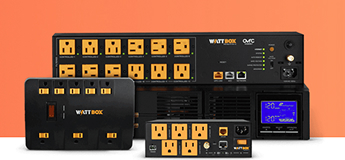
WattBox offers a full range of professional-grade power and surge protection solutions designed for every installation, including IP Power, UPSs, and traditional power distribution units.
Learn More
Explore how traditional and emerging battery solutions are making energy management more efficient, safer, and sustainable.
Read More
Learn how you can use OvrC to install, monitor and troubleshoot network devices, reducing downtime and service calls.
Read More